


Why the Dynamics 365 Business Central Service Module Isn’t Enough for Automotive Service
Back in 2017, we explained why the standard Dynamics NAV module wasn’t built for dealerships. In 2025, the Dynamics 365 Business Central automotive service module still falls short—while customer needs have only grown. It remains true in 2025—but the gap has actually widened. As dealerships, OEMs, and service shops demand more automation, data, and specialized workflows, that “standard” module still can’t keep up.
Here’s what’s changed, what still doesn’t work, and why solutions like Elva DMS are increasingly critical.
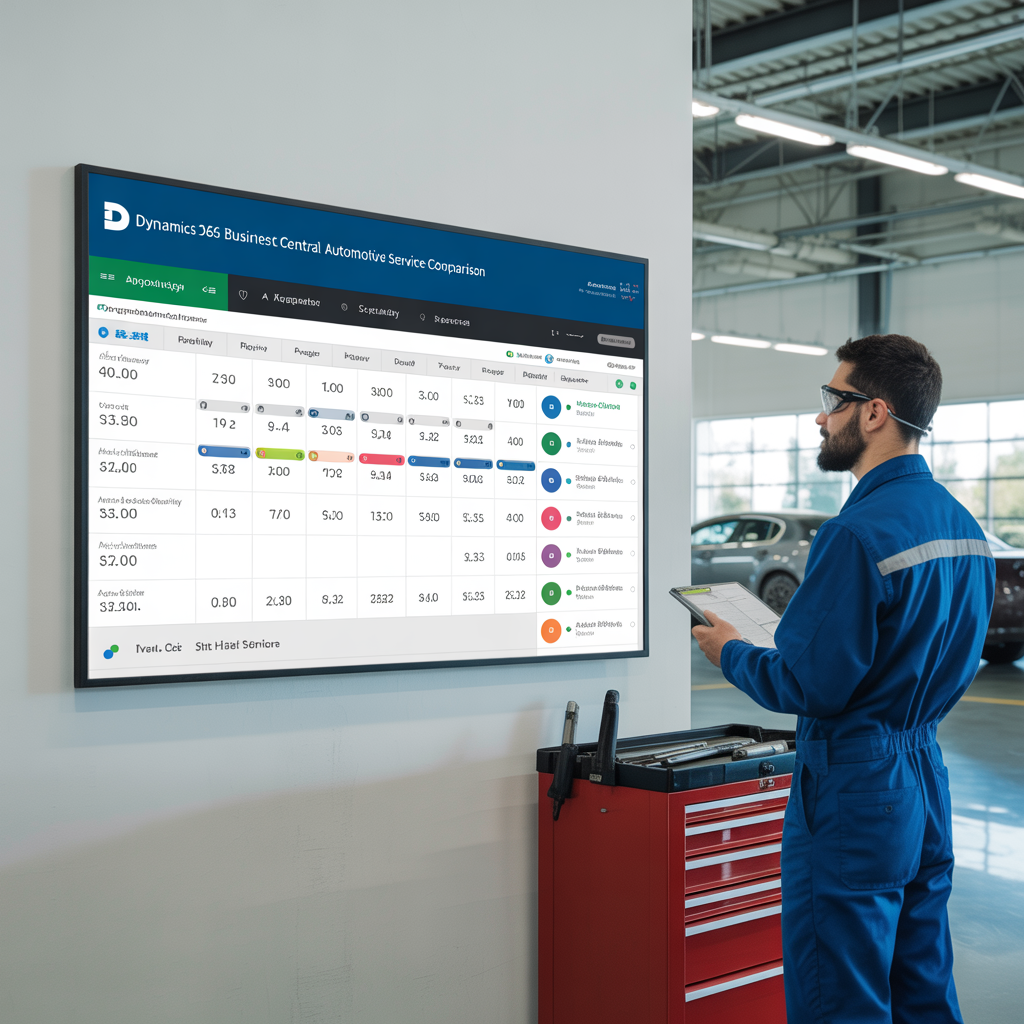
What’s Changed by 2025
- Higher expectations for digital integration: With telematics, connected vehicles, IoT, and manufacturer digital catalogs now standard, automotive service businesses expect seamless integration of vehicle data (VIN, make/model/year) from multiple external sources.
- Shift toward predictive maintenance & efficiency: Rather than reactive service, many service centers are moving to predictive maintenance. That requires scheduling tools, technician dashboards, utilization analytics, and spare-parts forecasting.
- Customer experience matters more: Faster turnarounds, transparent service tracking (customers want to see where their vehicle is), and appointment accuracy are priorities. This means service bays, online scheduling, technician allocation, all need modern tools.
- Regulatory and warranty complexity: With EVs, hybrid systems, and stricter environmental/service regulations, warranty processing, recall management, and labour/rate differentiation (by vehicle type, age, manufacturer) have become more complex. The old service module wasn’t built for that.
Where Dynamics 365 Business Central Automotive Service Falls Short
Even with enhancements since NAV days, the standard BC service module still falls short in major ways:
- Lack of automotive-tailored data structure
There’s no built-in support for chassis/VIN fields, make/model/year, OEM catalog integrations, or industry-specific attributes. These are essential for accurate diagnosis, parts ordering, and warranty processing. - Workflow limitations across service orders
Jobs in automotive are almost always tied to a single vehicle. The standard module allows multiple “equipment units” per job, but that adds unnecessary complexity and reduces usability. Drag-and-drop planners for service bays and ramps, technician schedules, etc., are very weak or non-existent. - Insufficient planning & resource tools
In many service shops today, you need graphical planning boards, technician time-clocking, service bay/ramp assignments, real-time work-in-progress visibility. The standard module is still too generic, too manual, and doesn’t offer efficient planning tools. - Poor reporting & analytics for modern automotive KPIs
Standard reports tend to be general (e.g. job counts), but don’t cover what matters most: technician efficiency, revenue per make/model, workshop utilization, parts performance, recall campaigns, etc. - Manual parts workflows & inter-location transfers
Spare parts ordering, returns, status tracking (issued, ordered, returned, etc.), transfers between warehouses and service bays — these are all manual or under-developed in the standard module. - Labour rates, warranties, and compliance gaps
Automotive companies need different rates by manufacturer, model, vehicle age. Warranty claim workflows have to tie into OEMs. Recall campaigns need tracking. And there’s compliance/regulatory reporting (which is more demanding now, especially for EVs or hybrid service work). The standard module doesn’t cover much of this out of the box.
Why These Gaps Cost Dealerships
When the service module lacks these features, the real costs are:
- Time wasted: Extra administrative effort, manual workarounds, delayed workflow due to missing integrations or inadequate tools.
- Customer dissatisfaction: Delays, mis-diagnosis, lack of transparency.
- Revenue leakage & inefficiencies: Poor parts usage, mis-allocated technician time, missed upsell or warranty recovery opportunities.
- Upgrade risk & technical debt: customizing the Business Central service module for automotive creates technical debt and slows upgrades.
What Elva DMS Offers in 2025 That the Standard Module Doesn’t
Here’s how Elva DMS is built specifically for automotive / heavy-equipment service, meeting modern expectations:
- Fully automotive-tailored service module: VIN/chassis tracking, manufacturer catalog integration, vehicle-specific work & parts visibility
- Graphical planning tools: Drag-and-drop bays, technician schedules, ramps; live workshop dashboards.
- Advanced reporting & dashboards: Including technician productivity, revenue by vehicle make/model, parts usage, workshop utilization, recall status.
- Automated spare parts workflows: Order placement, stock replenishment, handover from counter to service bay, parts returns — with statuses like issued, ordered, returned.
- Labour rates by make/model, warranty & recall campaign management built in.
- Seamless updates & support: Because Elva DMS is an industry solution, built for these needs, upgrades are smoother and scope defined.
Final Thoughts
It’s tempting to try to extend or adapt the standard Business Central service module — after all, “it’s already there.” The truth is, the Dynamics 365 Business Central automotive service module was never designed for today’s EVs, OEM warranty rules, and dealership workflows. Elva DMS fills those gaps.
A specialized solution like Elva DMS avoids many of those pitfalls. It gives dealerships what they need now, with capacity to scale, upgrade, comply, and deliver better customer service — without building it all from scratch.
If you’re running a service shop on the standard BC/NAV service module, we’d love to talk with you about what Elva DMS can plug in to your current system. Would you like a live demo just say the word.