


Vehicle Service Management System: The Key to Digital Transformation for Equipment and Vehicle Dealerships
Equipment and vehicle dealerships are changing fast. Machines are becoming more advanced, service contracts are growing in complexity, and customers expect quicker response times and better transparency.
Here’s the problem many dealerships face: their internal systems haven’t kept up.
Many still rely on outdated ERP platforms, spreadsheets, or disconnected tools to manage service operations, spare parts, and customer relationships. The result is slow processes, limited visibility, and frustrated teams.
This is where a vehicle service management system becomes essential. When built on a modern platform and connected with a full dealership management system, it allows equipment and vehicle dealers to run service operations, manage parts inventory, and coordinate technicians efficiently.
Let’s break down why this shift is happening and how modern systems are changing dealership operations.
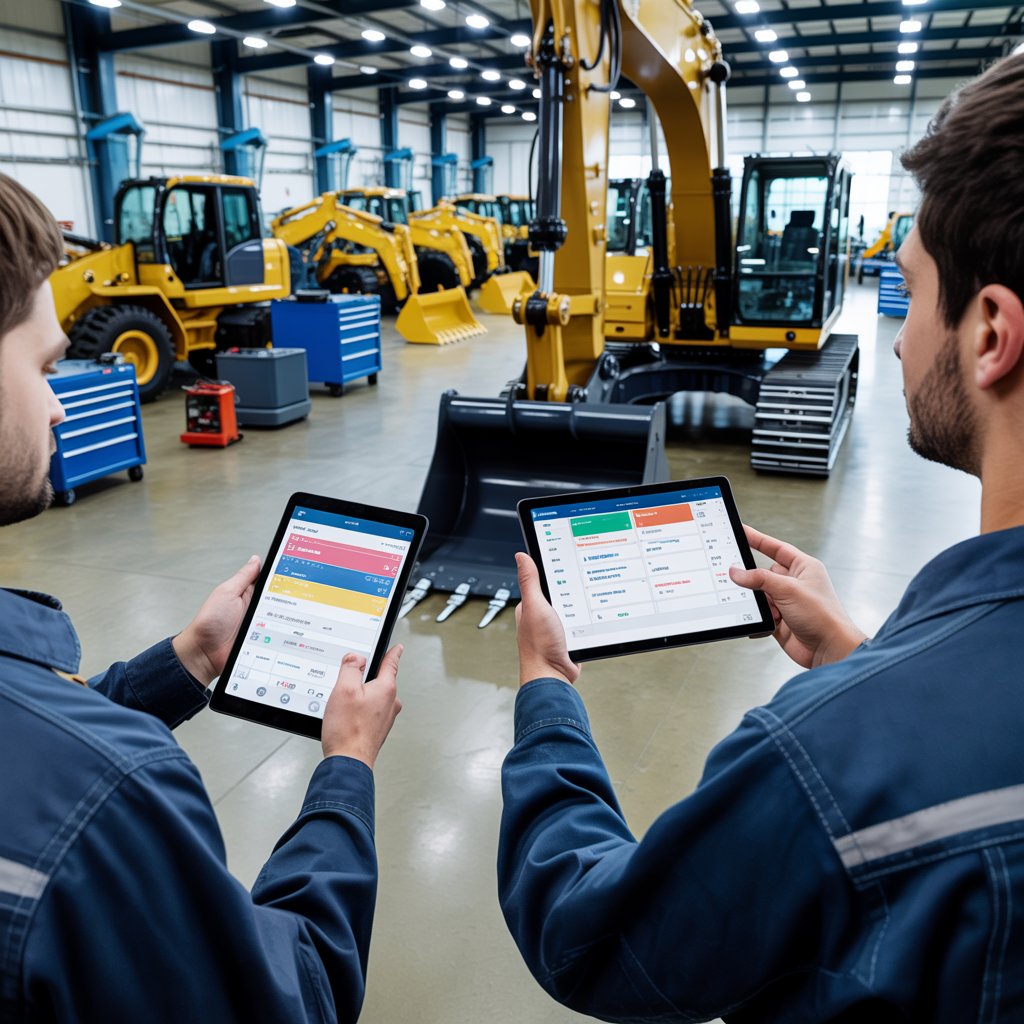
Why Equipment and Vehicle Dealerships Are Outgrowing Legacy ERP Systems
For years, dealerships relied on legacy ERP solutions or heavily customized systems that were never designed for modern equipment service operations.
Those systems often struggle with:
- Service scheduling across multiple technicians and locations
- Tracking spare parts inventory in real time
- Managing warranties and service contracts
- Connecting customer information across departments
- Supporting growing fleets of connected machines
As dealerships expand into service-driven business models, these limitations become painful.
Heavy machinery dealerships, construction equipment dealers, and forklift distributors are increasingly replacing legacy ERP systems with modern dealership ERP systems designed specifically for dealer operations.
A modern vehicle service management system for dealerships allows companies to move away from fragmented processes and toward integrated operations where service, parts, sales, and finance work together.
This shift is part of a broader trend: digital transformation for machinery dealerships.
The Role of a Modern Vehicle Service Management System in Dealership Operations
Service is often the most profitable department in an equipment dealership. Yet many dealers still manage service with spreadsheets or manual planning boards.
A modern vehicle service management system changes that completely.
It connects several core functions into one integrated environment:
Service scheduling and technician management
Dealerships can plan maintenance, repairs, and inspections while balancing technician workloads and workshop capacity.
Spare parts management
A built-in spare parts management system ensures technicians always know whether required components are available before scheduling work.
Warranty and service contract tracking
Dealers can manage warranty claims, service agreements, and preventive maintenance schedules without manual tracking.
Field service coordination
For construction equipment or agricultural machinery, service technicians often work on-site. Modern equipment service management software enables dispatching, mobile work orders, and real-time updates.
When these processes are integrated, dealerships gain full visibility into their operations and eliminate costly delays caused by missing parts or scheduling conflicts.
This is why many equipment distributors are investing in service management software for dealers that integrates tightly with their broader equipment dealer management system.
Integrating CRM, ERP, and Service Operations
One of the biggest inefficiencies in dealerships is data fragmentation.
Customer information may live in one system. Accounting in another. Service history in a third.
Modern platforms like Microsoft Dynamics Business Central allow dealerships to unify these processes inside a single dealership ERP system.
Solutions such as a Microsoft Dynamics dealer management system combine:
- CRM for managing customer relationships
- ERP for finance and operations
- Service management for workshop and field technicians
- Inventory systems for parts and equipment
The benefit is simple: every department sees the same data.
For example:
- Sales teams can check service history before selling a machine upgrade.
- Service managers can see customer contracts and warranties.
- Parts departments can track real-time inventory connected to work orders.
Many dealerships are now adopting Microsoft Dynamics Business Central for equipment dealers as the foundation for their digital operations.
Companies specializing in dealership solutions, such as ELVA DMS, build dealer-focused capabilities directly on top of this platform to support machinery and equipment distributors worldwide.
Replacing Spreadsheets With Integrated Service Scheduling and Parts Management
In many dealerships, service planning still happens in spreadsheets or on whiteboards in the workshop.
This approach creates several issues:
- Double bookings for technicians
- Delays due to unavailable parts
- Limited visibility for management
- Difficult reporting on service performance
A dealership service scheduling and parts inventory system eliminates these challenges.
With an integrated system, dealerships can:
- Schedule technicians based on skills and availability
- Automatically check spare parts availability before confirming service jobs
- Track machine service history across the full lifecycle
- Monitor workshop performance and service profitability
This is especially important for businesses operating specialized equipment such as forklifts, tractors, or construction machines.
Dealers running a forklift dealer management system or tractor dealership management software need precise service planning because downtime directly affects their customers’ operations.
Integrated spare parts and service management systems for equipment dealers make it possible to coordinate service teams and parts warehouses in real time.
Digital Transformation Strategies for Equipment Dealerships
Digital transformation in dealerships is not just about adopting new software. It’s about rethinking how operations work.
Successful dealerships focus on several key areas.
1. Service-driven business models
Equipment dealers are shifting from one-time sales to long-term service relationships.
A vehicle service management system helps manage preventive maintenance, service contracts, and long-term customer support.
2. Unified operational platforms
Instead of using multiple disconnected systems, dealerships adopt integrated solutions like machinery dealer software built on modern ERP platforms.
3. Real-time operational insights
Modern after-sales management software provides dashboards that show technician productivity, service revenue, and parts usage.
4. Mobility and field service tools
Technicians working on heavy machinery often operate outside the workshop. Mobile service tools allow them to access work orders, record service details, and update machine history on-site.
5. Scalability for growth
As dealerships expand into new markets or equipment segments, a flexible heavy equipment dealer software platform ensures systems can scale without major infrastructure changes.
Dealerships implementing these strategies gain faster service turnaround, improved customer satisfaction, and better operational control.
The Future of After-Sales Management in Equipment Dealerships
Service operations will continue to grow in importance for dealerships.
As machines become more connected, service departments will rely on predictive maintenance, IoT data, and automated service scheduling.
A modern vehicle service management system provides the foundation for this future by connecting machine data, service planning, and parts management.
Dealerships that invest in digital service platforms today will be able to:
- Reduce machine downtime for customers
- Improve technician productivity
- Optimize spare parts inventory
- Increase recurring service revenue
Those still relying on manual processes will struggle to keep up with the speed and complexity of modern equipment service operations.
To stay competitive, dealerships need systems designed specifically for the way they work.
Ready to Modernize Your Dealership Operations?
If your dealership is still relying on spreadsheets or legacy ERP systems, now is the time to explore modern solutions.
A fully integrated vehicle service management system can help you manage service operations, spare parts, and customer relationships while supporting long-term digital transformation.
Learn how modern dealer platforms work by visiting elvadms.com or follow us on Linkedin or Facebook for insights on dealership technology and best practices.
The dealerships that modernize their service operations today will be the ones leading the industry tomorrow.